
White Rhinoceros : Giants of the Grasslands and Their Conservation Journey
The white rhinoceros is the largest existing species of rhinoceros and is renowned for its surprisingly social nature. Despite the name white, these rhinos are actually grey, a misinterpretation that likely originated from the Afrikaans word wyd, meaning wide, a reference to their broad, square-shaped lips perfectly adapted for grazing.
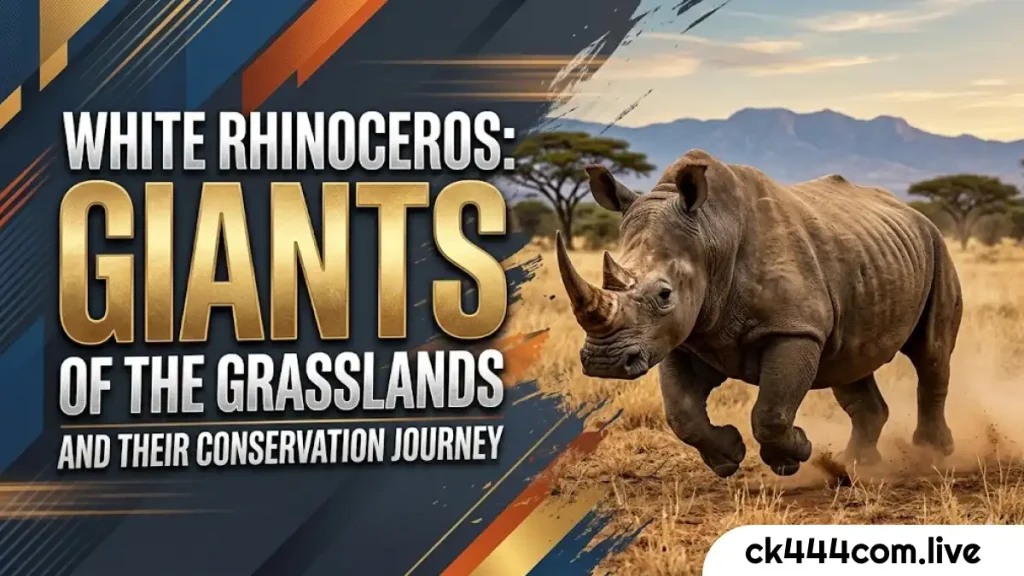
Table of Contents
Subspecies and Conservation Status
There are two genetically distinct subspecies of the white rhinoceros, each with very different conservation outlooks:
Southern White Rhinoceros. This subspecies is one of conservation’s greatest success stories. Once thought extinct in the late 19th century, the population was revived from fewer than 100 individuals to approximately 17,000–18,000 today. They are currently classified as Near Threatened, showing the potential of sustained conservation efforts.
Northern White Rhinoceros. In stark contrast, the Northern white rhino is functionally extinct. After the death of the last male, Sudan, in 2018, only two females, Najin and Fatu, remain at the Ol Pejeta Conservancy in Kenya. Without males, natural reproduction is impossible, though scientific intervention offers a glimmer of hope.
Physical and Behavioral Characteristics
White rhinoceroses are the world’s second-largest land mammals, after elephants. Adult males can weigh between 2,300 and 3,600 kg, making them true giants of the savannah.
These rhinos are grazers, feeding almost exclusively on short grasses, and they live in social groups called “crashes”, typically consisting of females and their calves. Adult males are largely solitary and maintain territories to assert dominance.
Reproduction is slow, with females experiencing a gestation period of about 16 months and giving birth to a single calf every 2–3 years. While their eyesight is relatively poor, white rhinos have excellent hearing and sense of smell, helping them navigate and detect predators in their environment.
Threats to Survival
The primary threat to white rhinoceroses is poaching, driven by the high value of their horns. Made of keratin, these horns are sought after in traditional Asian medicine and as status symbols, fueling illegal hunting networks.
For the Northern white rhino, genetic rescue efforts are underway. Advanced In Vitro Fertilization (IVF) techniques have produced over 30 embryos using the eggs of the last two females and preserved sperm. Plans are in motion to use Southern white rhinos as surrogate mothers to potentially revive this nearly lost subspecies.
Conservation Success Stories
Despite the challenges, there have been notable successes. In March 2026, Ugandan authorities successfully reintroduced Southern white rhinos into Kidepo Valley National Park, where they had been absent for over 40 years. Such milestones demonstrate that with continued effort, education, and protection, these magnificent creatures can continue to thrive in the wild.
The white rhinoceros symbolizes both the fragility and resilience of wildlife. While Northern white rhinos teeter on the brink of extinction, the revival of Southern white rhinos offers hope and serves as a powerful reminder of the impact of dedicated conservation. Protecting these giants is not just about preserving a species; it’s about maintaining the balance of ecosystems and ensuring that future generations can witness the majesty of the world’s largest social rhinoceroses roaming the grasslands.